asl
Wie kann ASL dabei helfen, die Aggressivität von Tumoren bei IDH-Wildtyp-Glioblastomen zu visualisieren?
Durch die nicht-invasive Quantifizierung des zerebralen Blutflusses (CBF) und der Permeabilität (Tex).
IDH-Wildtyp-Glioblastome (WHO-Grad 4) gehören zu den aggressivsten Hirntumoren und zeichnen sich durch eine hohe Vaskularität und eine erhöhte Permeabilität der Blut-Hirn-Schranke (BHS) aus. Die Arterial Spin Labeling (ASL)-MRT könnte eine Möglichkeit bieten, diese Merkmale ohne Kontrastmittel sichtbar zu machen – was potenziell der Langzeitüberwachung und der Patientensicherheit zugute kommt.
Wir unterstützen die klinische und onkologische Forschung mit einer umfassenden ASL-Lösung. Unser Ansatz umfasst:
- Wissenschaftliche Beratung für Studiendesign und Bildgebungsprotokolle
- Installation fortschrittlicher Multi-TE-ASL-Sequenzen
- Quantitative Analyse von CBF, ATT und Tex – einem potenziellen Marker für die Integrität der BBB
- Sichere, pseudonymisierte Datenverarbeitung über unsere Plattform mTRIAL
Warum ist dies für die Glioblastomforschung wichtig?
ASL ermöglicht die Erkennung von Hyperperfusion in Tumorregionen – oft korrelierend mit dem Tumorgrad und der Aggressivität. Der Tex-Parameter liefert zusätzliche Einblicke in die Störung der Blut-Hirn-Schranke, die typisch für hochgradige Gliome ist und die Medikamentenverabreichung und das Ansprechen auf die Behandlung beeinflussen kann. Dies macht ASL zu einem leistungsstarken Werkzeug für die nicht-invasive Tumorkarakterisierung und Therapieüberwachung.
Ob Sie eine klinische Studie durchführen oder neue bildgebende Biomarker erforschen – wir sind Ihr Partner für die Integration von ASL in die neuroonkologische Forschung.
Lassen Sie uns die Bildgebung von Hirntumoren vorantreiben – sicher, präzise und ohne Kontrastmittel.

Tomorrow is World Alzheimer’s Day.
This day emphasizes the importance of taking action at every stage of life to promote brain health and well-being.
Alzheimer’s disease affects millions of people worldwide, including those living with the disease, as well as their families and caregivers. It is a journey full of challenges.
At mediri, we support ASL measurements for the contrast free assessment of the blood brain barrier status after MR guided and focused ultrasound mediated BBB-opening in an Alzheimer therapy studies.
Let’s work together to advocate for more research and better care options to improve the lives of those affected by Alzheimer’s.

We are thrilled to announce the successful completion of the EU Horizon 2020 project ASPIRE!
Our collaborative efforts have led to the development of an innovative new prototype for one-click perfusion analysis of ASL images. You can find a demo version of ExploreASL in mTRIAL here
ASL (Arterial Spin Labeling) is a cutting-edge MR imaging technique for contrast agent free perfusion imaging of the brain. It holds immense promise in improving the diagnosis and treatment monitoring of Alzheimer’s Disease. Especially for older adults with cardiovascular risk factors, ASL could be a game-changer.
Thank you all for your hard work and dedication, Gold Standard Phantoms,
Hochschule Darmstadt, Amsterdam UMC and mediri GmbH

Tired of deploying image evaluation scripts on your local machine? ASL image evaluation for brain perfusion analysis can be as easy as this: click, click.
Watch this video to see how images are uploaded from your local network to the central mTRIAL server – pseudonymization on the fly and image categorizaton included.

Just imagine… evaluating brain perfusion on arterial spin labeling images was just one click away. Watch this video to see how we implemented Explore ASL in our mTRIAL platform to facilitate and standardize your next clinical study on neurodegenerative diseases.
Stay tuned to see how easy your data reaches mTRIAL.
Contact us for more information on ASL imaging and analysis.

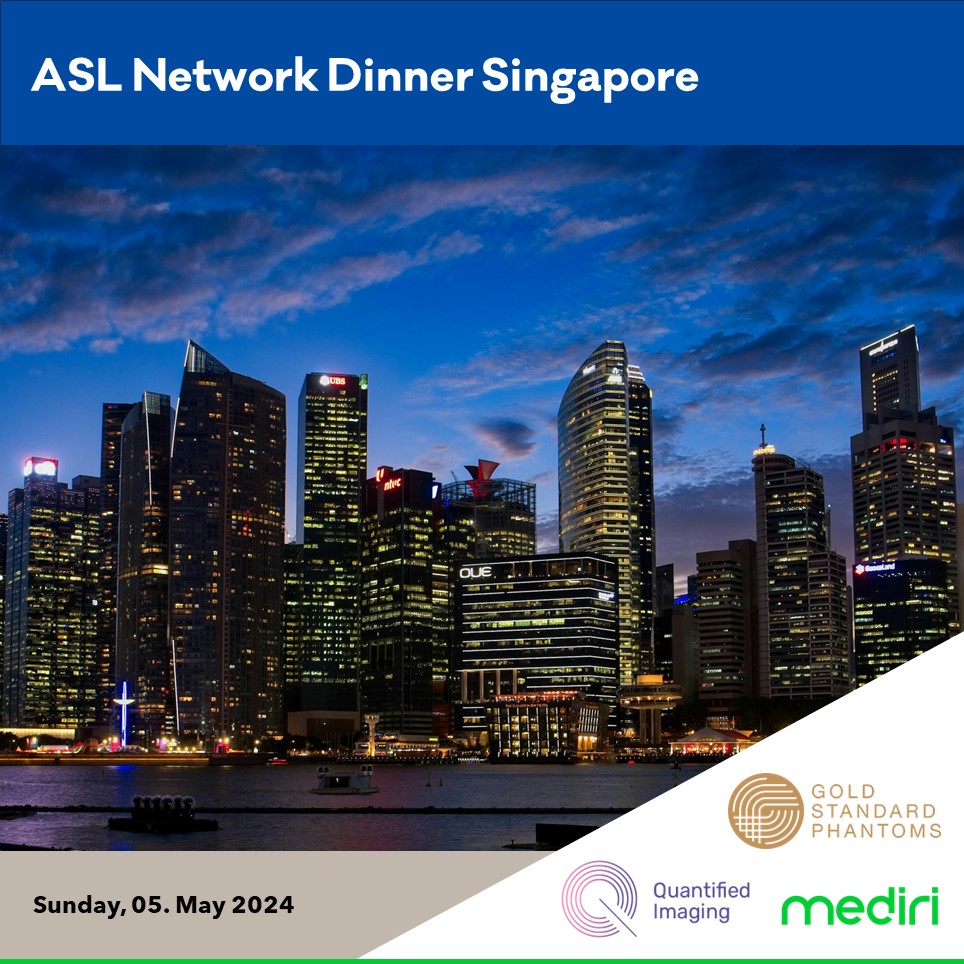
We are extremely happy to have a third sponsor on board for our ASL Network Dinner 2024 in Singapore: Quantified Imaging.
A warm welcome to Professor Michael Chappell and Dr Tom Kirk who span out their company from the University of Nottingham in 2023.
To register for the event, please click here.
More info on the sponsors: mediri, Gold Standard Phantoms, Quantified Imaging
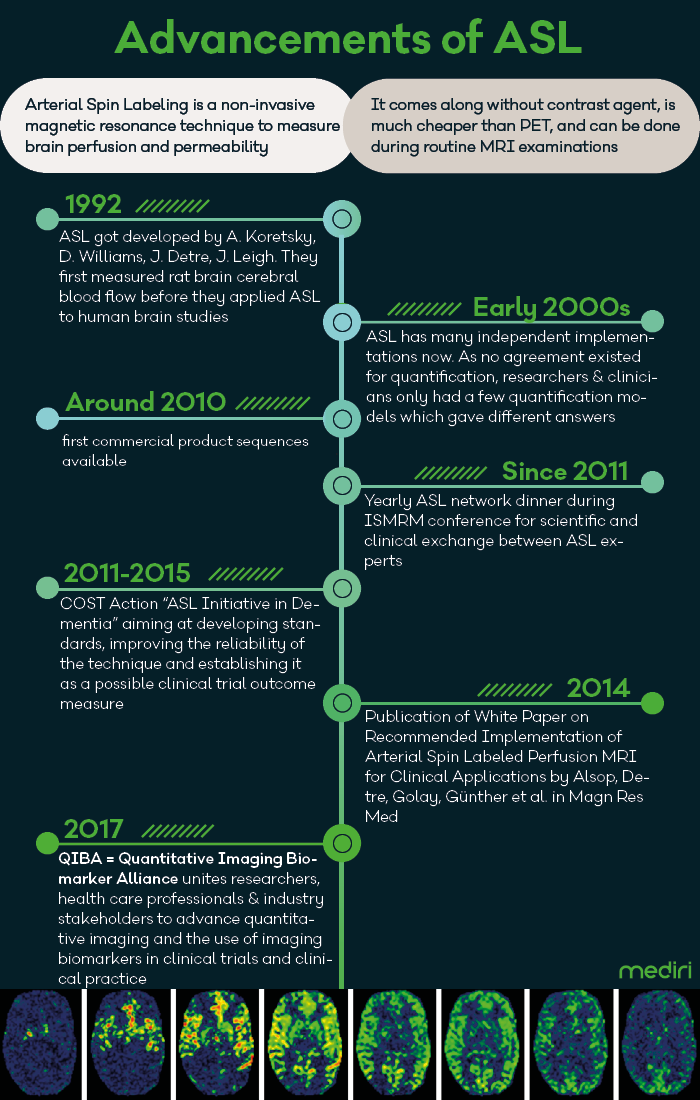
30 years after the first successful Arterial Spin Labeling (ASL) MR image acquisition to measure cerebral blood flow in rat brain, the early detection of Alzheimer’s using ASL gains enormous importance with the recent publication of the study results for Lecanemab. Now that there is hope for efficient therapies in dementia diseases, it is a good time to review the steps that have been gone since then. Many initiatives aiming at reliable and comparable quantification of brain perfusion measurements are paving the way for broad usage of ASL in clinical studies focusing on Alzheimer‘s and other dementia diseases.
It’s great to be in-person again. After a meeting on the advances in the ASPIRE project together with GSP and VUmc, mediri enjoyed extensive scientific exchange and insights to latest developments in MRI at ISMRM in London. Also thanks to everyone for joining the ASL Network Dinner during ISMRM 2022.
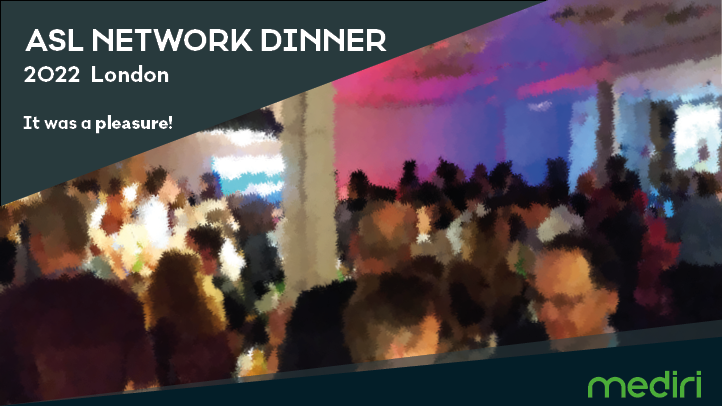
mediri and Gold Standard Phantoms aim to ready ASL for clinical trials | Sunday, 08. May 2022 | Details & registration: editor(AT)asl-network.org
For more information on our visions visit http://aspire-mri.eu/