News

DACH Symposium
17. September 2026
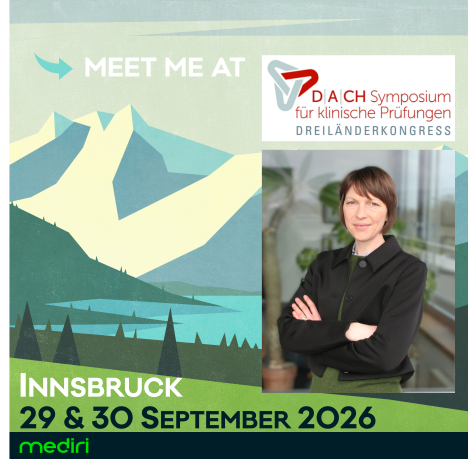
💡 How can we improve efficiency and security in academic imaging trials?
Our COO Julia Müller is looking forward to discussing this important topic with you at the DACH Symposium on 29-30 September in Innsbruck.
A few ideas to kick off the conversation:
💿 Replace image transfer via CDs with browser-based uploads for faster and more secure access
🩻 Integrate central radiology review directly into the image data management system to streamline workflows
⛓️ Automatically transfer read results into the eCRF system to minimize manual entry and reduce errors
Looking forward to exchanging perspectives and exploring new approaches together.
World Alzheimer's Month...
03. September 2026
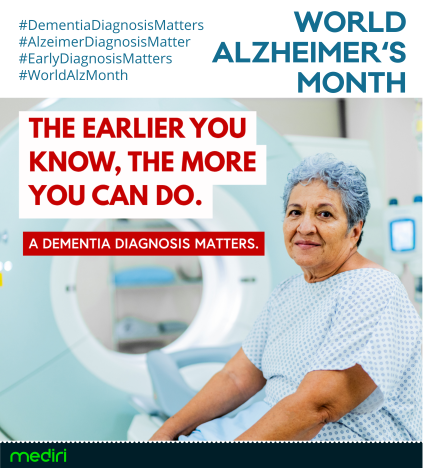
…reminds us that when it comes to dementia, earlier detection is critical.
A recent study by Beatriz Padrela et al. suggests that blood-brain barrier (BBB) water exchange may serve as a sensitive early biomarker for Alzheimer’s disease and age-related cognitive decline.
Using non-invasive multi-echo ASL MRI, they examined BBB water exchange in 160 adults aged 50+ across the cognitive spectrum, from cognitively normal individuals to those with subjective cognitive decline (SCD) and mild cognitive impairment (MCI).
Key findings:
🧠 BBB water exchange was already significantly reduced in participants with subjective cognitive decline and declined further in mild cognitive impairment.
📉 Traditional perfusion markers such as cerebral blood flow showed significant changes only at the MCI stage.
🔍 BBB water exchange also appeared sensitive to moderate small vessel disease, highlighting the importance of vascular contributions to cognitive decline.
These results suggest that BBB water exchange mapping could become a promising non-invasive biomarker for detecting early neurovascular dysfunction, potentially enabling earlier intervention in Alzheimer’s disease and other dementias.
As the field continues to search for reliable biomarkers, advanced MRI techniques may help us identify at-risk individuals years before substantial cognitive impairment develops. During World Alzheimer’s Month, studies like this underscore the importance of innovation in neuroimaging and the growing recognition that vascular health plays a crucial role in brain health.
🎓 Celebrating another PhD success at mediri!
14. July 2026
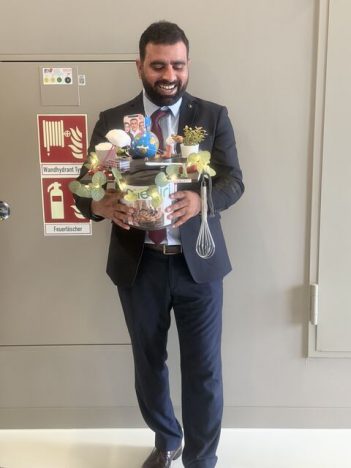
Congratulations to Yaqeen Ali on his excellent PhD defense — a great achievement and an important milestone in his research journey. We are proud to have supported him throughout this process.
With his success, we are pleased to add another accomplished researcher to the group of PhD students who have been accompanied by mediri on their scientific path:
- Johannes Gregori
- Sophie Zang
- Ina Kompan
- Julia Müller
- Klaus Eickel
- Hannah Strohm
- Sergio Tascon Morales
- Simon Konstandin
It’s inspiring to see how each of them has contributed to advancing medical imaging and clinical research. We look forward to seeing where their expertise and curiosity will lead next.
👏 Congratulations again, Yaqeen — and to all who continue to push the boundaries of research.
mTRIAL 3.6 Release
24. June 2026
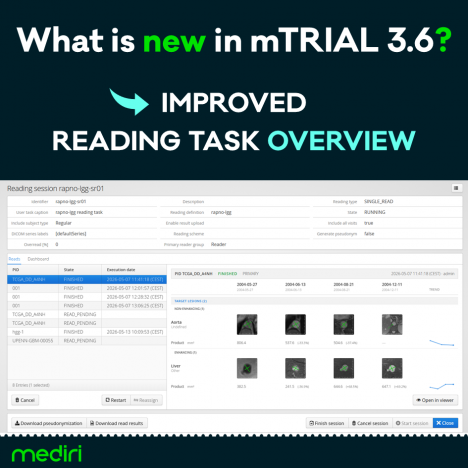
mTRIAL 3.6 is released and introduces an enhanced reading task overview – giving you greater process control and real-time insights:
✅ Instantly see which tasks are completed and which are still pending
✅ Get direct overview of annotations and trends
✅ Restart, re-assign or cancel individual reads with ease
✅ Download all results in just one click
Want to streamline the management of image-based clinical trials and central radiologic evaluations?
👉 Get in touch with us to learn more.
World Brain Tumor Day
08. June 2026
On World Brain Tumor Day, we join the global effort to raise awareness for brain tumor patients and reaffirm our commitment to driving research forward and enhancing outcomes.
We are proud to support clinical studies in brain tumors, particularly in glioma research. Contributing to the development of new therapies and better diagnostics is at the core of what we do.
With our RANO Reading Support, fully integrated into the eCRF, we help ensure consistent, standardized, and reliable assessment of imaging data. This integration enhances data quality and supports more robust clinical trial results.
Together, we continue working towards a future where brain tumor patients benefit from faster diagnoses, better treatments, and improved care.
World MS Day
28. May 2026
Multiple Sclerosis is a complex and evolving disease, where even the smallest changes in the brain can have significant clinical impact. Detecting these subtle changes early and reliably is key to accurate staging and effective treatment decisions.
Just imagine…
Identifying smouldering lesions in a brain MRI with just one click.
On World MS Day, we spotlight our research—bringing Voxel-Guided Morphometry into the mTRIAL® platform to enable precise, scalable, and accessible imaging analysis.
– Reliable detection of subtle disease progression
– Objective and reproducible imaging biomarkers
– Intuitive and efficient workflows for experts and researchers
Our shared goal is simple yet powerful:
– Transform complex neuroimaging data into actionable insights
– Support clinicians in making confident, informed decisions
– Ultimately improve outcomes for people living with MS
Today, we stand with the global MS community — raising awareness, fostering innovation, and working towards a future where technology helps us stay one step ahead of the disease.
Research Stay within the BosomShield Project
06. May 2026
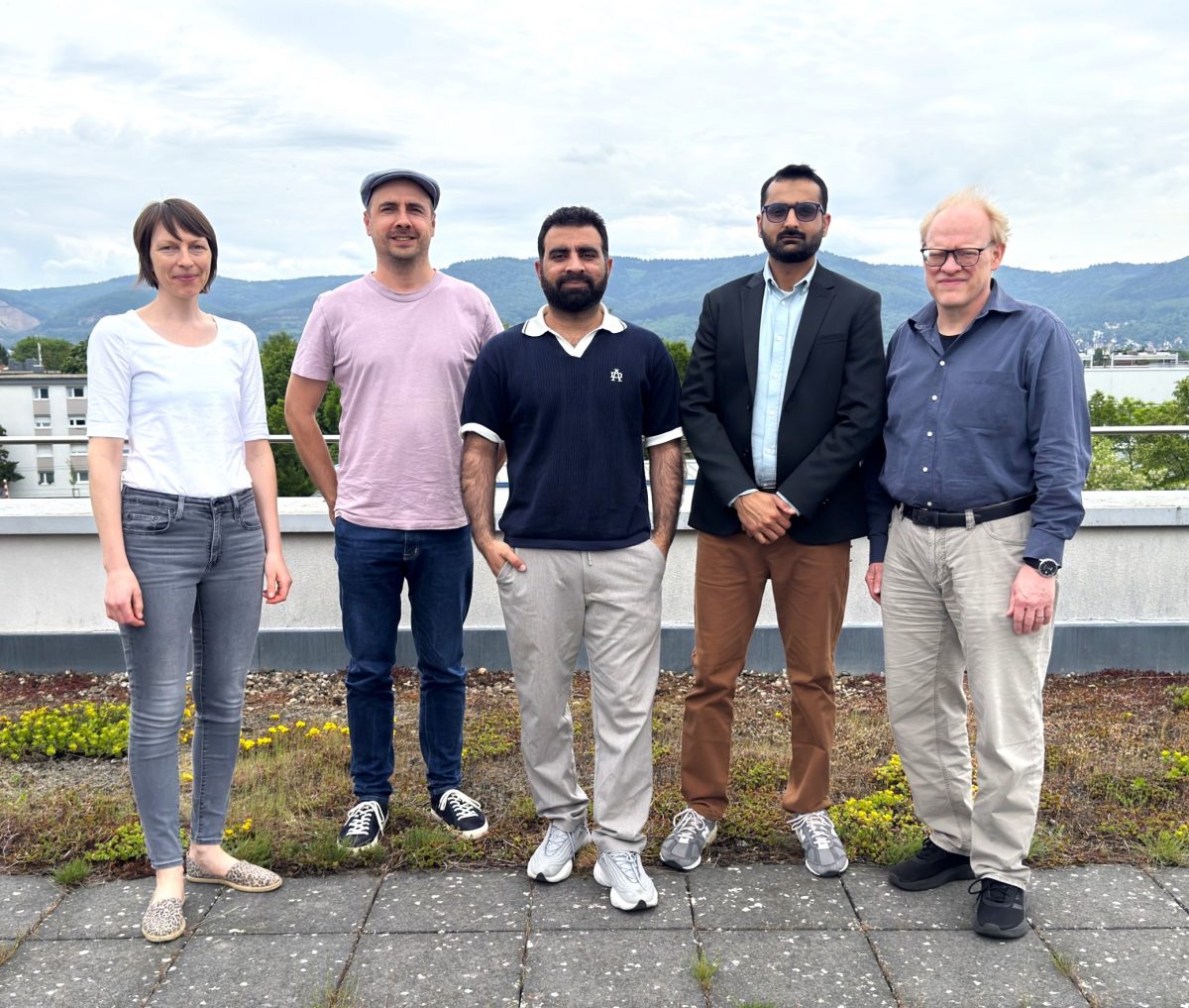
We are pleased to welcome Adnan Khalid, a PhD Researcher from Universitat Rovira i Virgili, Spain, who has joined us for a research stay as part of the BosomShield Project.
During his stay, Adnan will contribute to research focused on breast cancer molecular subtype classification and the assessment of associated relapse risk. His expertise and research interests align strongly with the goals of the project, which aims to advance intelligent and reliable approaches for breast cancer analysis and decision support.
We look forward to a productive collaboration, meaningful knowledge exchange, and impactful research outcomes during his time her with us in Heidelberg.
Welcome, Adnan. We wish you a successful and inspiring research stay.
Research Publication
30. April 2026
Excited to highlight another great achievement of our team:
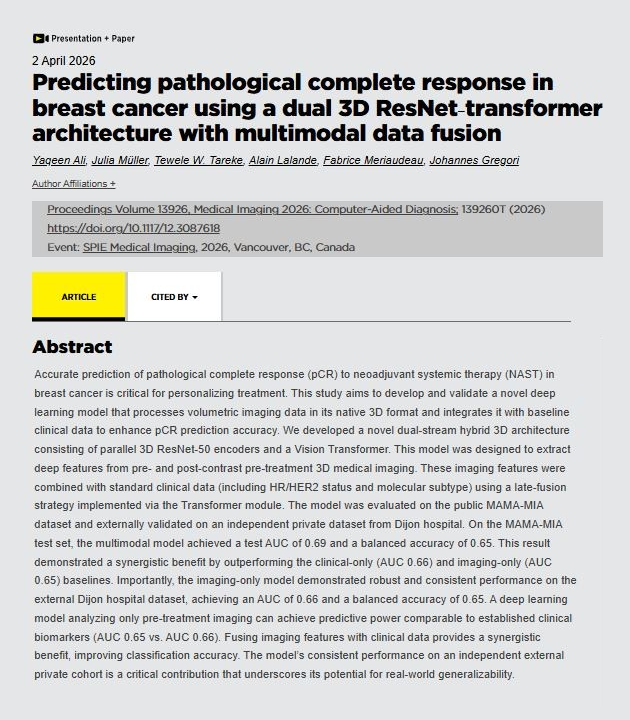
Our PhD candidate Yaqeen Ali is first author of a publication on advancing AI‑based prediction of treatment response in breast cancer.
This study introduces a dual‑stream deep learning model that integrates both pre‑ and early‑treatment DCE‑MRI to predict pathological complete response (pCR). By combining spatial and temporal imaging information, the approach delivers improved predictive performance and provides valuable insights for more personalized therapy planning.
A strong step toward leveraging multimodal imaging and deep learning to support clinical decision‑making in breast cancer care.
Congratulations to the co-authors: Julia Müller, Tewele Weletnsea TAREKE. PhD., Alain Lalande, Fabrice Meriaudeau, Johannes Gregori!
Read the full article here
CARESTAR – first patient recruited
28. April 2026
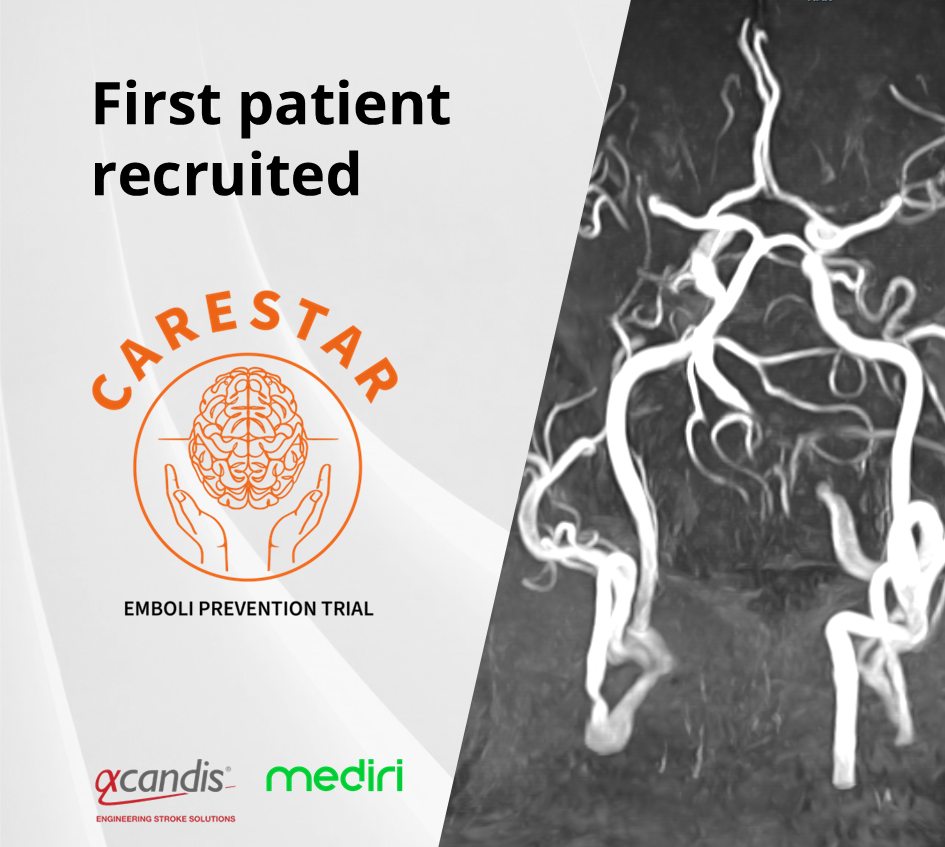
We are happy and proud to support Acandis in the conduct of the CARESTAR study.
The CARESTAR Study aims to evaluate the clinical safety and efficacy of the CARESTO® heal Stent in routine clinical practice for patients with symptomatic non-stenotic carotid disease (SyNC), a condition in which carotid arteries are narrowed by less than 50% but still exhibit high-risk features that can lead to recurrent stroke.
This prospective, randomised, multicenter, international study investigates whether stenting with the CARESTO® Heal stent in addition to optimal medical therapy is superior to optimal medical therapy alone in preventing future strokes. CARESTAR has the potential to identify the best treatment strategy and optimise future therapeutic approaches. We’re excited to share that the first patient has been recruited — an important milestone for the entire team.
Looking forward to the next five years of partnership, innovation, and progress.
Learn more about the CARESTO® Heal stent
Proud Research Milestone
21. April 2026
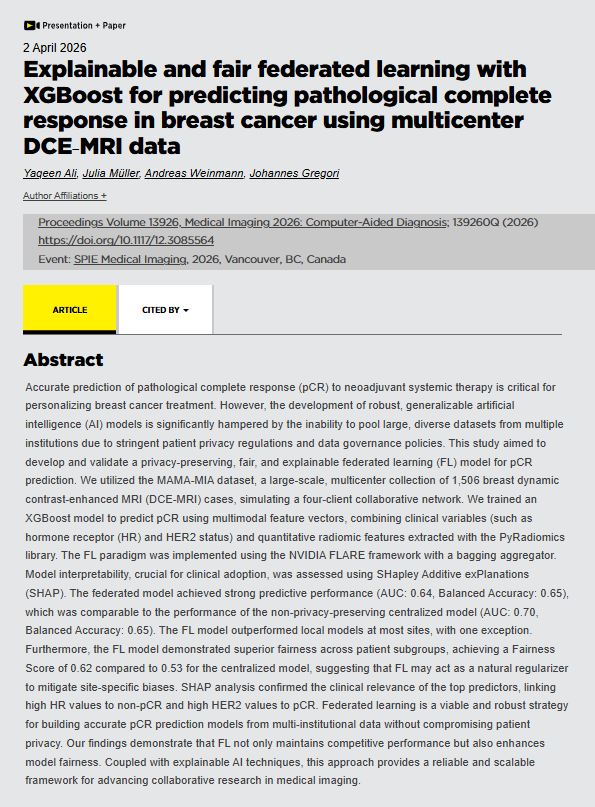
Proud moment for our team. Our PhD candidate Yaqeen Ali has published new research on explainable and fair federated learning for predicting treatment response in breast cancer, together with Julia Müller, Andreas Weinmann, and Johannes Gregori.
Using the large multicenter MAMA‑MIA DCE‑MRI dataset, the study shows that federated XGBoost models can deliver strong performance, improved fairness, and full patient‑privacy preservation—supported by SHAP‑based interpretability.
A promising step toward collaborative, trustworthy AI in medical imaging.
Read the full article here