
News

World Parkinson’s Day
14. April 2026
On World Parkinson’s Day 2026, we stand behind this year’s call:
“It’s time for Europe to bridge the care gap and provide better support for people with Parkinson’s.”
We are committed to advancing brain‑health innovation. Our involvement in the EU‑funded AEGEUS project supports the development of a groundbreaking EEG–ultrasound device that combines high‑resolution EEG with functional ultrasound imaging to access both cortical and deep‑brain activity.
This novel wearable system aims to enable more accurate diagnostics and targeted, non‑invasive neurostimulation—technology that can ultimately pave the way for improved understanding and treatment of neurological diseases, including those impacting people with Parkinson’s disease.
We continue to contribute to evidence‑based technological innovation that supports more precise diagnostics and strengthens clinical decision‑making in neurological care.
World Health Day
08. April 2026
Together for health. Stand with science.
Health thrives where people, technology, and science come together. On yersterday’s World Health Day, we at mediri want to highlight the essential role that scientific evidence plays in delivering modern, precise, and reliable healthcare.
Every day, our work reminds us:
Medical progress depends on data, research, and innovative technologies. It also depends on people collaborating to make diagnostics and therapy safer and more efficient. This is exactly what drives us — with our solutions for medical image analysis and AI‑supported evaluation.
We are proud to continue this journey with our partners, customers, and teams.
Latest research publication
26. March 2026
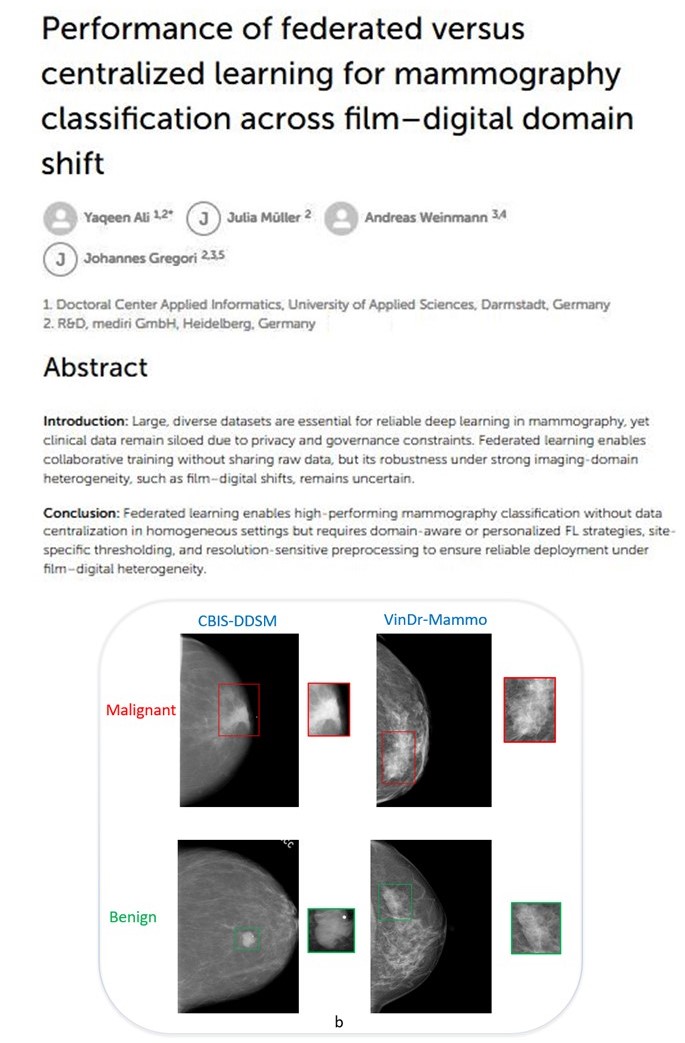
Excited to share our latest research publication! Our new paper, “Performance of federated versus centralized learning for mammography classification across film–digital domain shift”, is now published in Frontiers in Digital Health.
What’s it about? Deep learning in mammography relies on large, diverse datasets — but clinical data often remain siloed. Federated Learning (FL) offers a privacy-preserving alternative by enabling collaborative model training without sharing raw data. But how well does FL perform when imaging data come from very different domains, such as scanned film vs. digital mammography?
Key insights from our study:
- FL performs on par with centralized learning when all data come from similar domains.
- Under strong film–digital domain shift, FL maintains high performance on digital images but struggles on film-based data, showing reduced precision.
- Popular FL variants (FedAvg, FedProx, SCAFFOLD, FedBN) do not fully overcome this domain mismatch.
- Increasing image resolution helps but cannot close the performance gap.
- The findings highlight the need for domain-aware and personalized FL approaches to ensure safe, reliable deployment in breast imaging.
Why this matters: As healthcare moves toward privacy-preserving AI, understanding the limits of federated learning is crucial — especially in high-stakes applications like breast cancer detection.
Read the full article HERE
New publication
12. March 2026
We’re proud to share a new scientific publication by our CEO, Prof. Matthias Guenther.
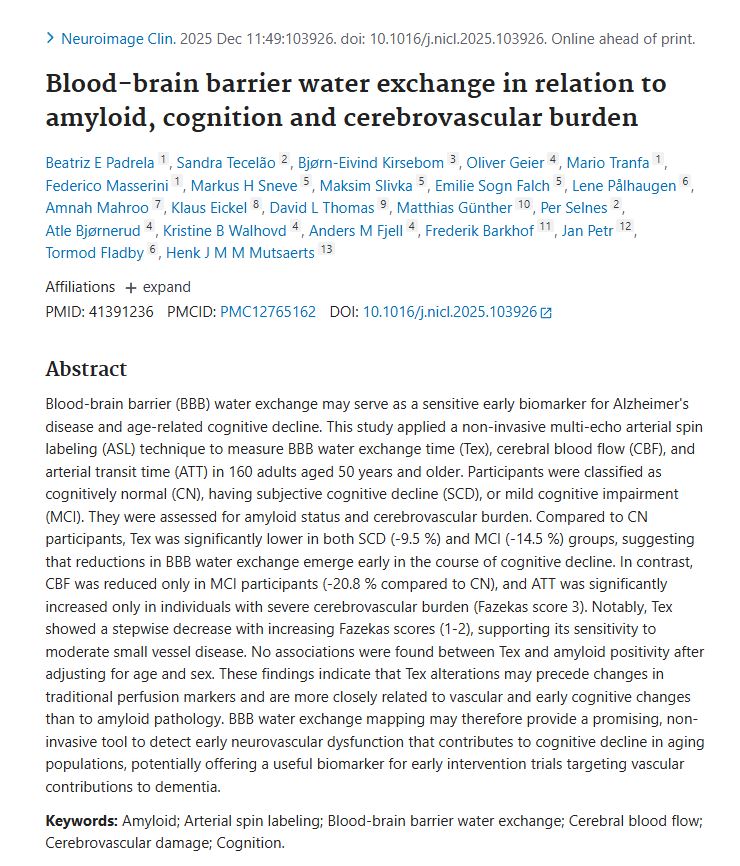
Understanding the earliest changes in the aging brain is essential for developing effective interventions against Alzheimer’s disease and vascular cognitive impairment. A newly published study featuring contributions from Prof. Matthias Günther and an international team of researchers sheds light on a promising biomarker: blood–brain barrier (BBB) water exchange.
Using a non‑invasive multi‑echo arterial spin labeling (ASL) technique, the study examined 160 adults aged 50+ across different cognitive stages. The findings reveal:
Key Highlights:
– Individuals with subjective cognitive decline (SCD) and mild cognitive impairment (MCI) showed significantly reduced BBB water exchange time (Tex) compared to cognitively normal participants.
– Tex decreases appeared earlier than changes in traditional perfusion markers such as cerebral blood flow.
– BBB water exchange showed a stepwise decline with increasing cerebrovascular burden, indicating strong sensitivity to small vessel disease.
– After adjusting for age and sex, no association was found between Tex and amyloid positivity.
– These results suggest that vascular and neurovascular changes may precede amyloid‑related pathology in the trajectory of cognitive decline.
Why This Matters
BBB water exchange mapping could become a powerful, non‑invasive tool for detecting early neurovascular dysfunction—long before more overt symptoms or structural changes appear. This opens new possibilities for early diagnosis, risk stratification, and targeted intervention trials focusing on vascular contributions to dementia.
If you are interested in evaluating ASL or exploring how advanced perfusion imaging can support your research or clinical studies, feel free to reach out to us — we’re happy to discuss how we can support your work.
Read the full publication HERE
Award Nomination for Bosomshield
09. March 2026
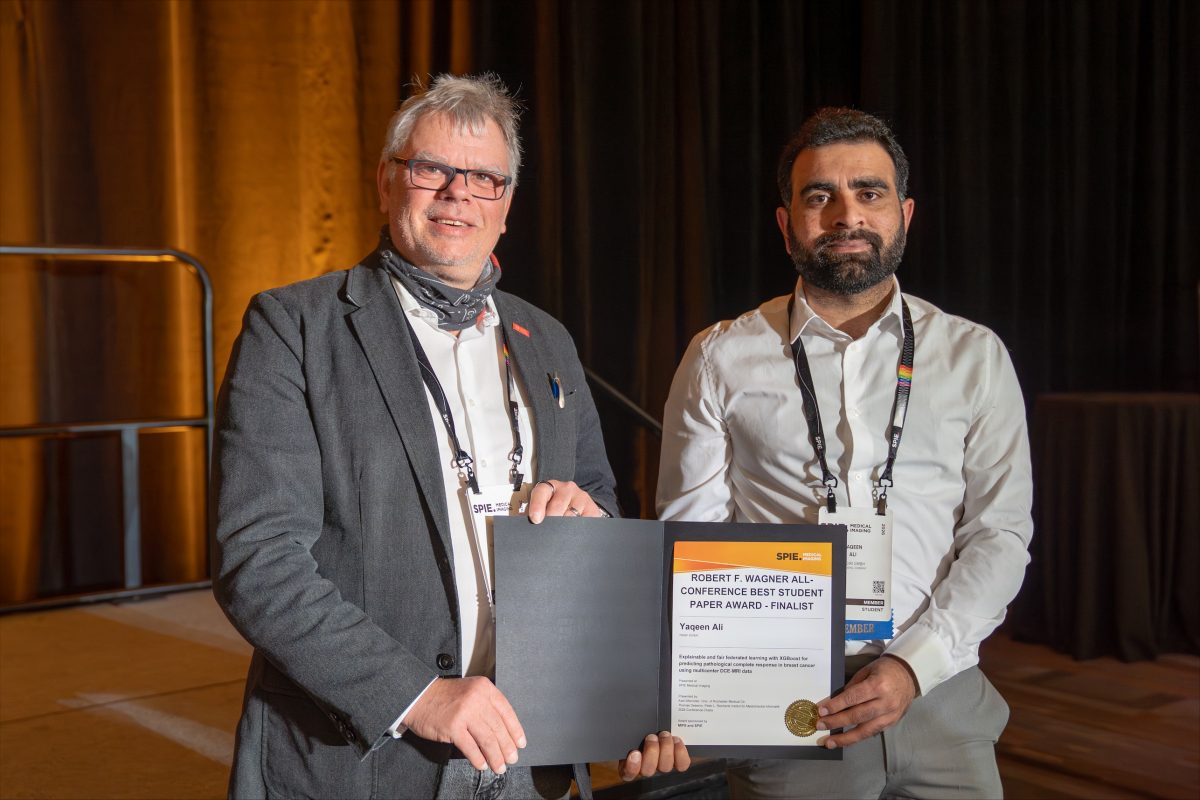
We are pleased to announce that two research papers from Yaqeen Ali, our Ph.D. student for the BosomShield project have been accepted for oral presentation at SPIE Medical Imaging 2026 in Vancouver, Canada.
We are particularly proud that one of these papers has been selected as a finalist for SPIE Medical Imaging Robert F. Wagner All-Conference Best Student Paper Award —a remarkable recognition of scientific excellence.
The presented works include:
– Explainable and Fair Federated Learning with XGBoost for Predicting Pathological Complete Response in Breast Cancer using Multi-Center DCE-MRI Data
– Predicting Pathological Complete Response in Breast Cancer Using a Dual 3D ResNet–Transformer Architecture with Multimodal Data Fusion
These contributions highlight our commitment to advancing trustworthy AI, federated learning, and multimodal deep learning to improve the prediction of breast cancer treatment response from MRI data. Our goal is to enable more reliable, transparent, and collaborative medical AI systems that support clinicians and enhance patient care.
Imaging Biomarkers for Alzheimer’s Care
17. February 2026
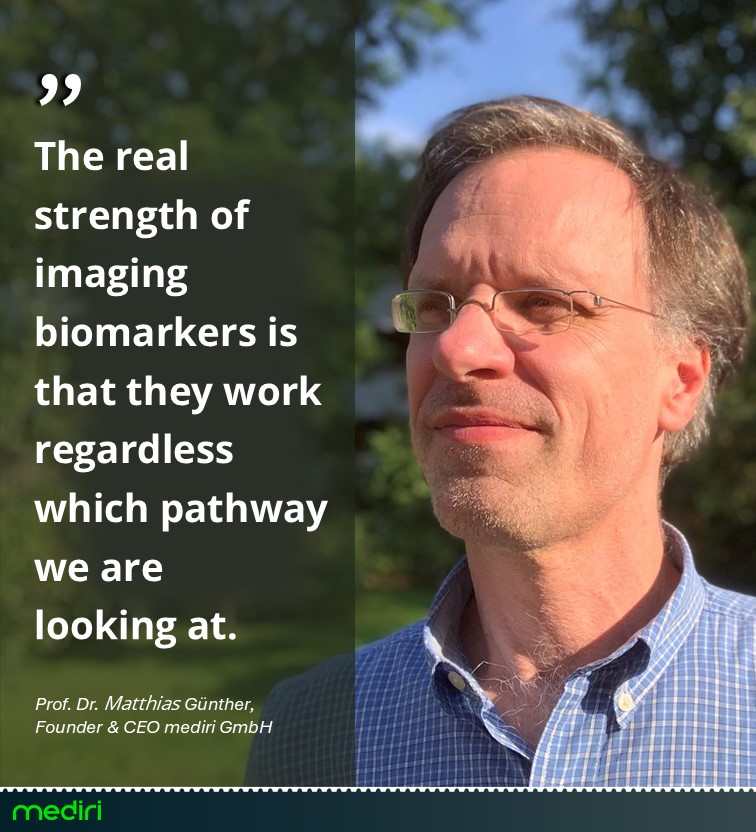
As amyloid‑targeting therapies advance, imaging biomarkers are becoming essential for efficient and informed patient management in Alzheimer’s disease.
With the approval of Lecanemab and Donanemab, new therapeutic possibilities have emerged — but so have new challenges. Clinicians must now navigate high treatment costs, mixed therapeutic effectiveness, and significant risks, all while ensuring that each patient receives the most appropriate care.
This is exactly where imaging can provide crucial guidance.
Our ASL‑MRI biomarkers may show meaningful correlations with later cognitive outcomes. They can help patients and neurologists gain additional insights when considering whether a therapy should be continued, adjusted, or stopped. In a treatment landscape where responses vary widely, such biomarkers may offer valuable support for more personalized and responsible care. More insight on the topic can be found in the recording of our webinar ” Why do so many Alzheimer’s trials fail to deliver actionable insights ” which we hosted together with wemedo: LINK
International Childhood Cancer Day
12. February 2026
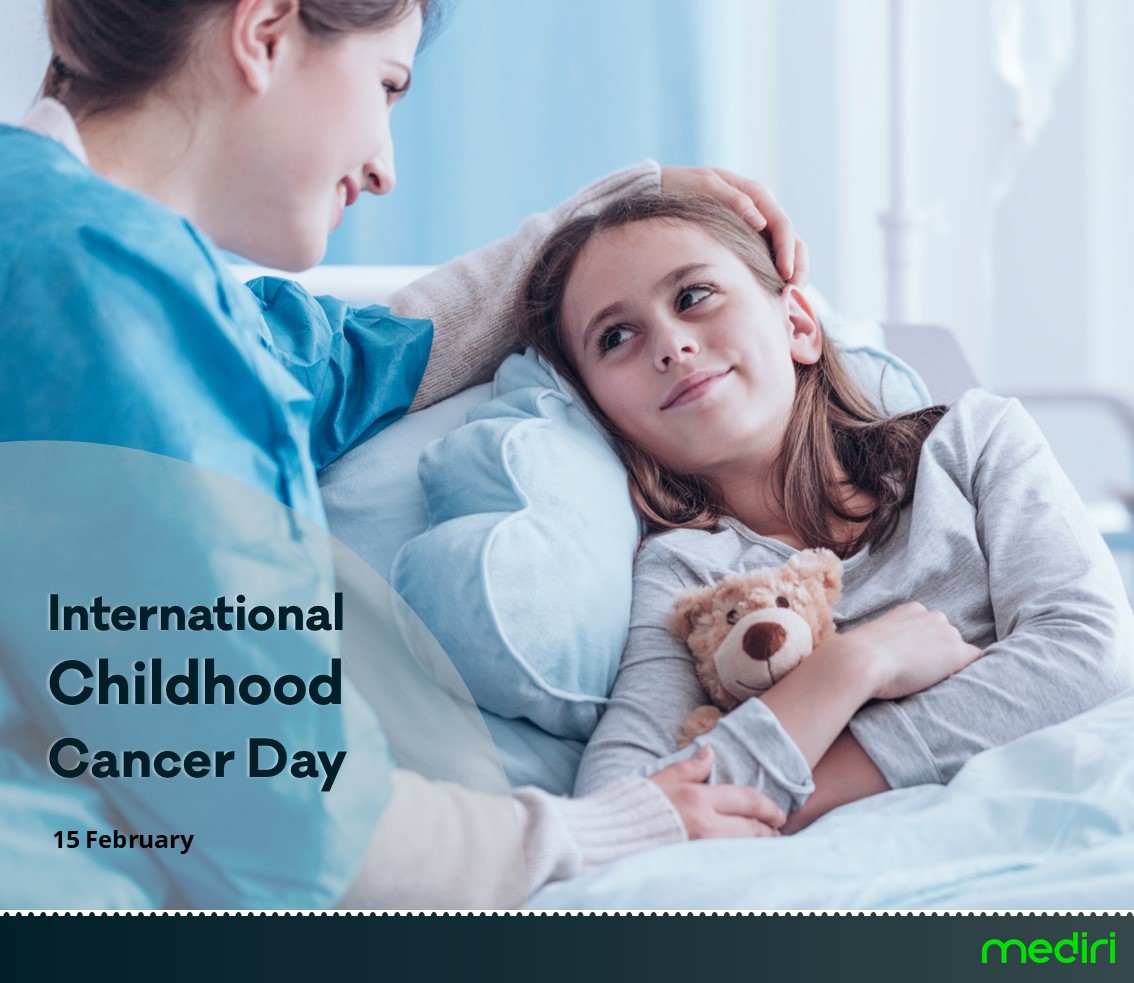
February 15 is International Childhood Cancer Day.
Even though pediatric cancer studies are rare, our commitment to supporting them remains strong.
Research in childhood cancer is challenging: small patient groups, complex biology, and strict ethical requirements make studies difficult to conduct. And treating children adds another layer — therapies must work effectively while protecting growing bodies, and families need comprehensive emotional support.
Every study matters. And we’re here to help move this vital work forward.
World Cancer Day
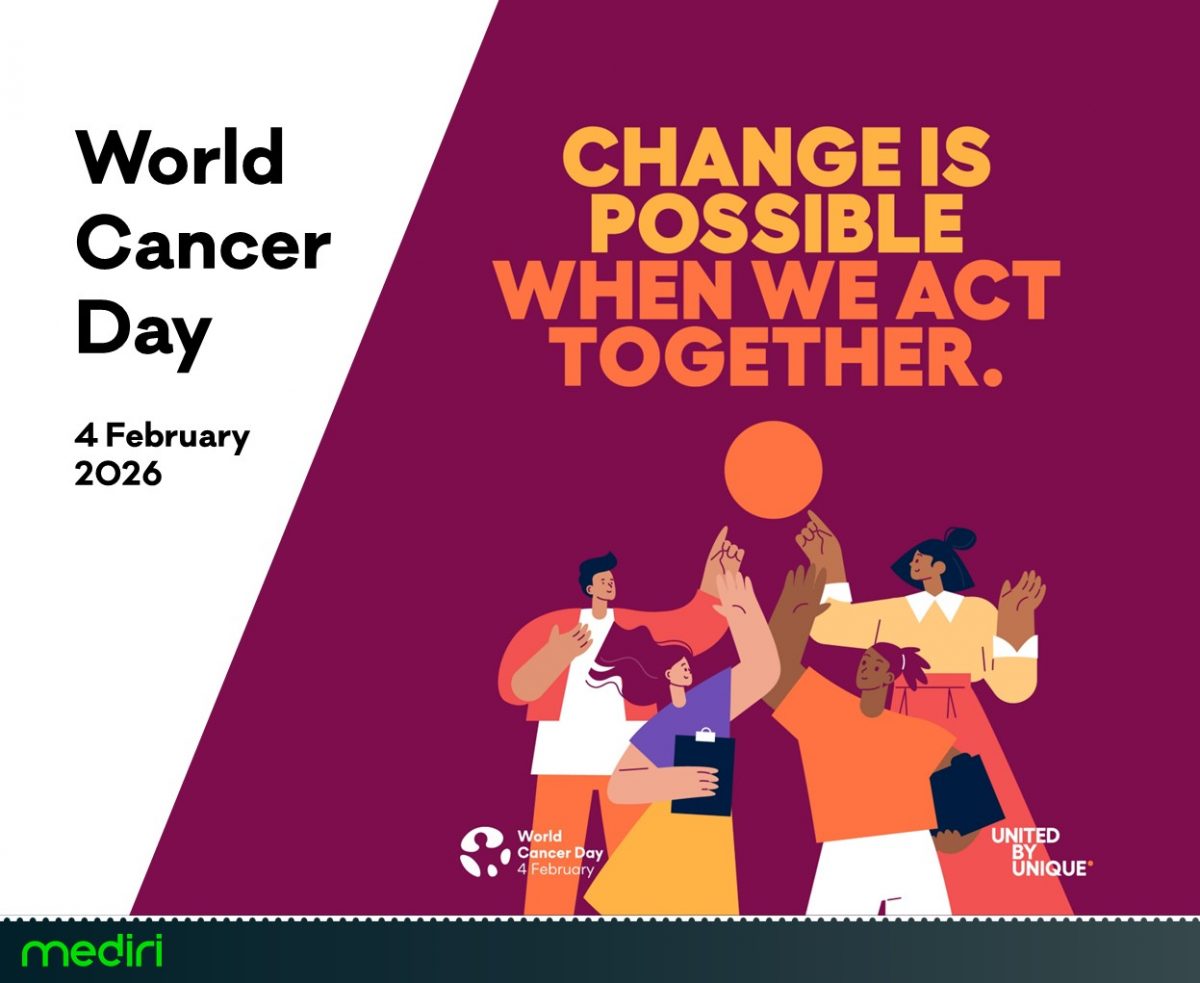
04. February 2026
Every day, millions of people worldwide live with chronic, serious or rare diseases – including cancer, for which there is often no cure or effective treatment.
Progress is only possible when we act together: doctors, scientists, patients, and society as a whole.
Clinical research is the key. It’s through medical studies that we develop new therapies and medications — giving hope, improving quality of life, and increasing the chances of healing.
To better understand how clinical trials work and why participation matters, Studien wirken provides clear and accessible insights.
But this progress depends on informed and courageous individuals who choose to participate in clinical trials. Without them, innovation stands still.
Together we can move research forward — because cancer needs collective action.
Alzheimer’s Webinar
02. February 2026
Last week, our live webinar on “Why do so many Alzheimer’s trials fail to deliver actionable insights?” took place on LinkedIn.
Our Founder & CEO, Prof. Matthias Günther and Dr. Nikola Cihoric, MD, RO, Founder & Chief Product Officer at Wemedoo, explored the challenges of current Alzheimer’s trials and discussed how meaningful insights can be improved.
If you missed the 30‑minute session, you can rewatch the full webinar anytime via the following YouTube link: VIDEO LINK
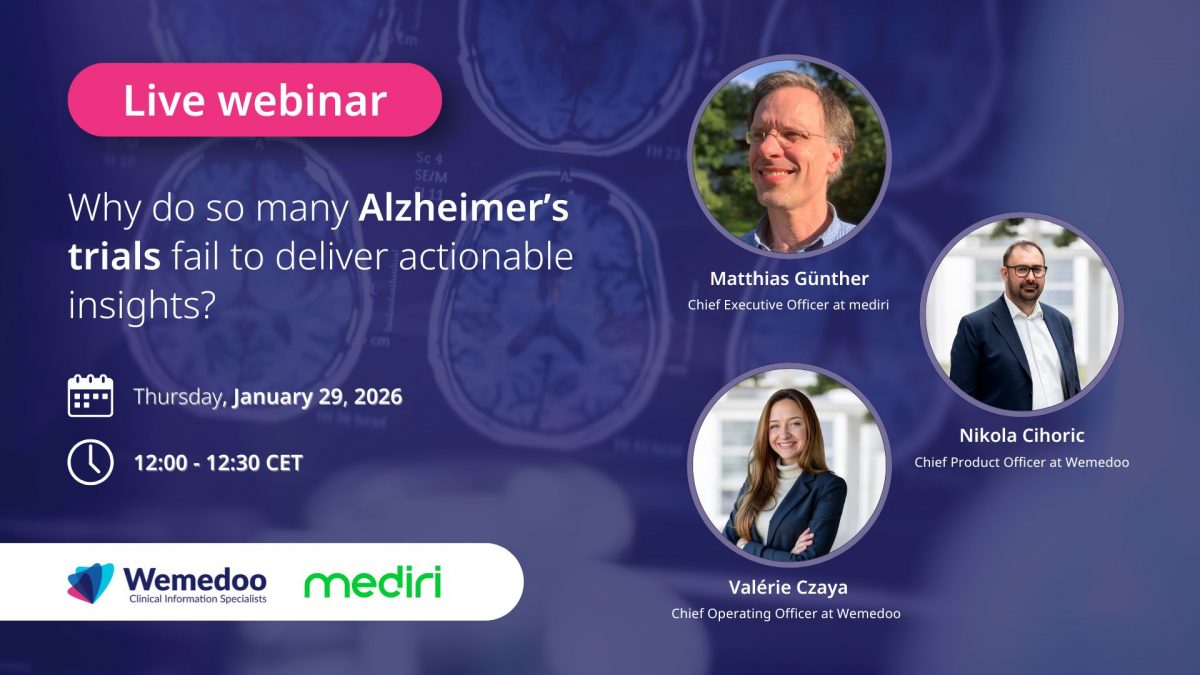
Advancing Alzheimer’s trials through smarter imaging
22. January 2026
Latest data from our partner Quantified Imaging demonstrate that ASL‑MRI can reveal treatment response to Lecanemab after just 2 months. These perfusion‑based biomarkers show strong alignment with long‑term cognitive outcomes — a major step toward more reliable and efficient trial design.
In a field challenged by complex biology and heterogeneous patient profiles, advanced imaging offers a clearer, earlier window into therapeutic impact.
Wemedoo and mediri are hosting a joint 30‑minute live webinar, bringing together clinical, imaging, and data perspectives to examine why Alzheimer’s trials so often fall short — and what can be done differently.
Speakers:
Prof. Dr. Matthias Guenther, Founder & CEO, mediri
Dr. Nikola Cihoric, MD, RO, Founder & Chief Product Officer, Wemedoo
Live Webinar
January 29, 2026
12:00 – 12:30 CET
Join us to explore how imaging innovation can accelerate Alzheimer’s research.
Webinar LINK